
Table of Contents
If you are serious about 4K gaming or high-performance content creation, the ASUS TUF RTX 5080 belongs on your shortlist. This is ASUS’s mid-tier take on the RTX 5080 — sitting above the Prime line and below the ROG Astral — and it brings military-grade build quality, a large vapor chamber cooling system, and NVIDIA’s Blackwell architecture together at a price that serious builders are willing to pay. I went through the full spec sheet, real-world benchmark data, and long-term ownership considerations so you can decide if this card is the right upgrade before you commit.
As an Amazon Associate, I earn from qualifying purchases #commissionsearned
► ASUS TUF RTX 5080 OC Edition: Link (Amazon)
► Gaming Monitor Recommendations: Link (Amazon)
What Is the ASUS TUF RTX 5080
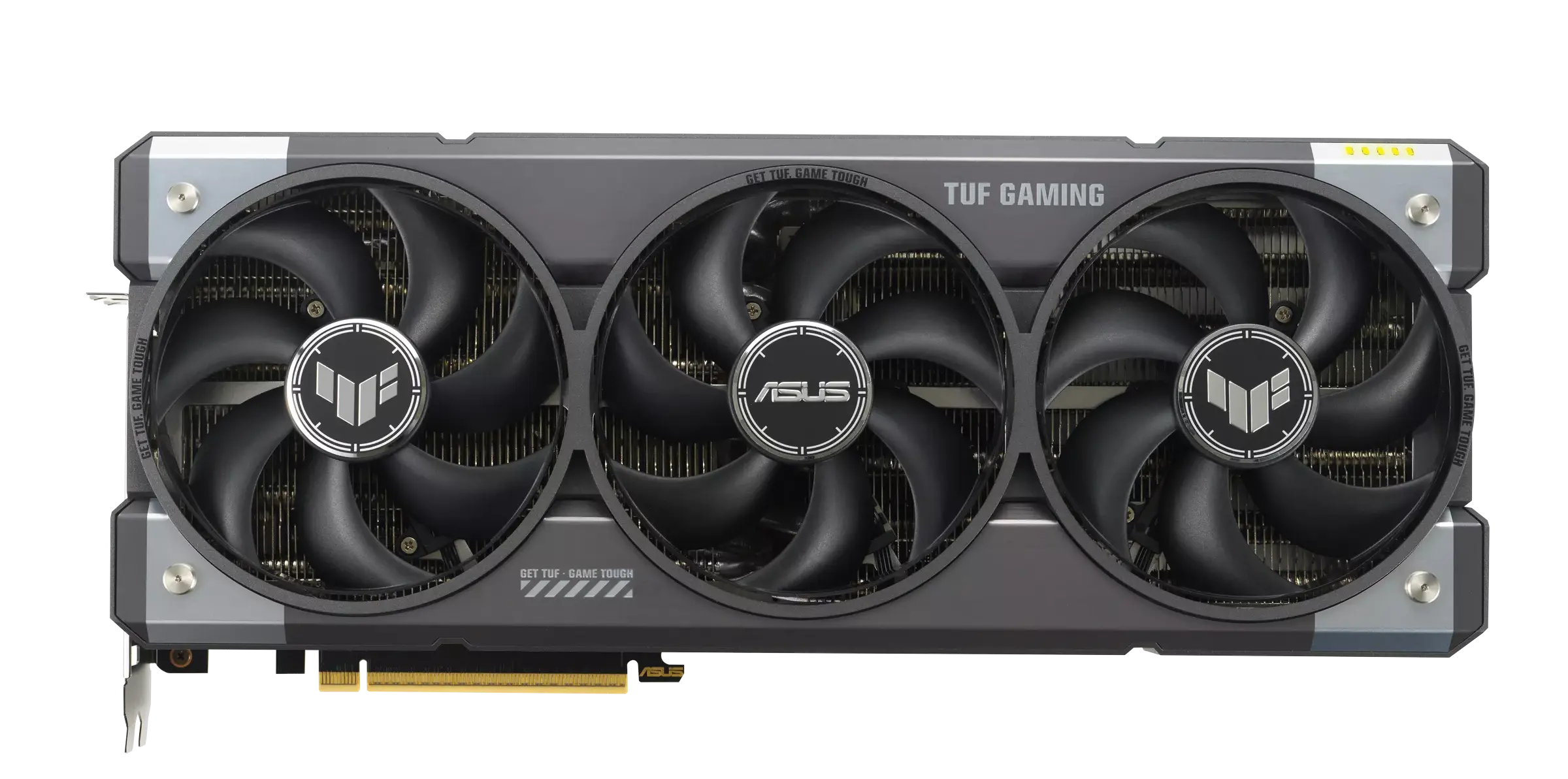
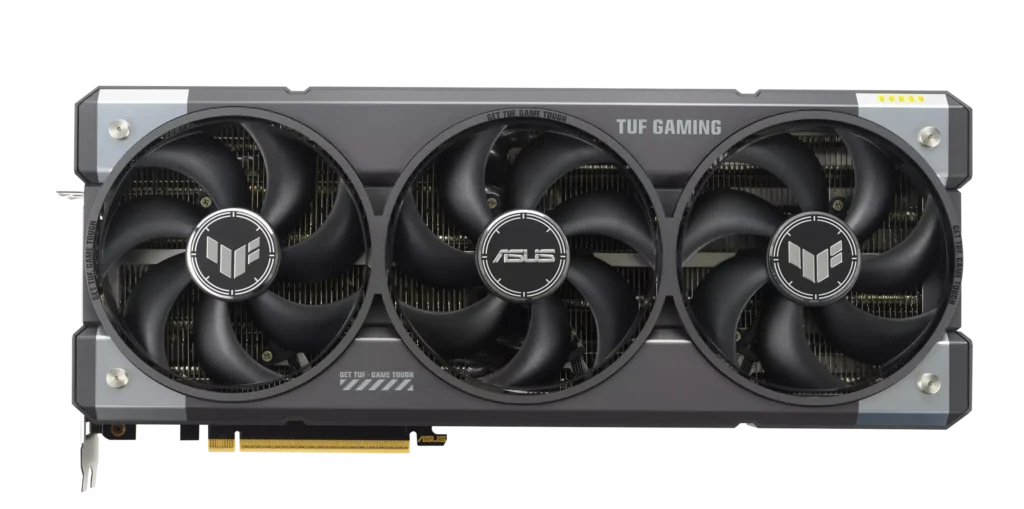
The ASUS TUF Gaming GeForce RTX 5080 16GB GDDR7 OC Edition is a factory-overclocked aftermarket version of NVIDIA’s RTX 5080 GPU. The TUF Gaming line sits in the middle of ASUS’s GPU lineup — below the flagship ROG Astral models and above the budget-friendly Prime series. As a result, it offers a meaningful step up in cooling and build quality over reference cards without the extreme price premium of the ROG tier. The OC Edition specifically pushes the boost clock to 2730 MHz in OC mode and 2700 MHz in Default mode, both above the reference spec of 2617 MHz.
The card occupies a 3.6-slot footprint and measures 348mm in length, so case clearance planning is essential before purchasing. It ships with a GPU support bracket, velcro cable tie, TUF magnetic badge, and a 16-pin power adapter in the box. Additionally, ASUS recommends an 850W power supply minimum for a system built around this card — a requirement worth factoring into your total build budget if you are upgrading from older hardware.
Key Features Worth Knowing
Military-Grade Components and Protective PCB Coating
The TUF Gaming line earns its name through the components ASUS uses internally. The card uses certified military-grade TUF chokes and MOSFETs, along with TUF 5K black metallic capacitors that increase temperature tolerance by over 50% compared to standard capacitors. For long-term owners, this matters more than benchmark scores — components that handle heat and electrical stress better simply last longer. Furthermore, the entire PCB receives a protective conformal coating that guards against moisture, dust, and debris. Consequently, this card is meaningfully more durable than standard AIB designs running the same GPU.
Vapor Chamber Cooling and Axial-Tech Fans
Thermal management is where the TUF RTX 5080 separates itself from reference designs. The card uses a large vapor chamber paired with a phase-change GPU thermal pad and a jumbo heatsink with ASUS MaxContact technology, which increases contact surface area by 5% for improved heat transfer. Three Axial-Tech fans move up to 23% more air than standard fan designs. Additionally, the two outer fans spin counter-clockwise relative to the center fan, which reduces turbulence and improves airflow consistency across the heatsink. In real-world testing, GPU temperatures stayed well below 70°C during sustained 4K gaming sessions — an impressive result for a 360W card.
The fans also run a Zero RPM mode, staying completely off when GPU temperatures remain below 50°C. In practice, this means the card is completely silent during light desktop tasks, video playback, and casual gaming sessions. The Dual BIOS switch on the card’s edge lets you toggle between Performance mode and Quiet mode without entering software, which is a practical feature for users who want flexibility without fuss.
NVIDIA Blackwell Architecture and DLSS 4
The RTX 5080 is built on NVIDIA’s Blackwell architecture, which brings fifth-generation Tensor Cores and fourth-generation Ray Tracing Cores. The most impactful new feature for gamers is DLSS 4 with Multi Frame Generation, which is exclusive to RTX 5000 series cards. Multi Frame Generation uses AI to generate multiple frames between each rendered frame, producing a substantial boost in perceived frame rates in supported titles. Specifically, with MFG activated, the RTX 5080 can achieve performance that significantly outpaces the previous generation in compatible games. However, it is worth noting that the raw native performance gain over an RTX 4080 Super without AI enhancements is modest — the real advantage comes from leveraging DLSS 4 fully.
Real-World Performance
Independent benchmarks paint a consistent picture of the ASUS TUF RTX 5080 as a strong 4K performer, particularly when DLSS 4 is active. In Cyberpunk 2077 at 4K with ray tracing enabled, the card delivers around 40 fps natively — however, with DLSS 4 Multi Frame Generation enabled, that figure multiplies substantially into smooth, playable territory. At 1440p, the card has significant headroom on nearly every current title at maximum settings. For competitive gaming at 1080p or 1440p, frame rates reach well beyond what any current display can render, making this card future-proof for high-refresh-rate setups.
Content creators will find the RTX 5080 equally capable. Video editing, 3D rendering, and AI-assisted creative work all benefit from the Blackwell architecture’s AI performance rating of 1858 TOPS. Additionally, the card supports up to four simultaneous displays through its two HDMI 2.1b and three DisplayPort 2.1b outputs, which makes it a practical choice for multi-monitor productivity setups.
One honest limitation worth flagging: buyers upgrading from an RTX 4080 Super will find the native performance gains underwhelming without DLSS 4. The architectural improvements are real, but the raw rasterization jump is incremental at this generation. Moreover, the TUF OC Edition is priced above the MSRP Founders Edition, so buyers need to weigh the cooling, durability, and OC advantages against that premium. For anyone upgrading from an RTX 4070 or older, however, the performance increase is substantial and clearly justifiable.
Pros and Cons
Pros
- Military-grade components and protective PCB coating deliver exceptional long-term durability
- Vapor chamber cooling keeps temperatures well below 70°C under sustained 4K load
- Zero RPM fans make the card completely silent during light use
- Dual BIOS switch gives instant hardware-level control over Performance vs Quiet mode
- DLSS 4 Multi Frame Generation is exclusive to RTX 5000 series and delivers a major perceived performance boost
- 16GB GDDR7 at 30 Gbps on a 256-bit bus is well-suited for 4K and content creation workloads
- Five display outputs including two HDMI 2.1b and three DisplayPort 2.1b
- Includes GPU support bracket in the box — a practical addition for heavy cards in large builds
Cons
- 3.6-slot design requires a full ATX case with adequate clearance — not suitable for compact builds
- Requires an 850W PSU minimum — older systems may need a power supply upgrade alongside the GPU
- Native rasterization gains over an RTX 4080 Super are modest without leveraging DLSS 4
- Priced above MSRP Founders Edition — buyers pay a premium for the TUF cooling and build quality
- MuseTree AI software feels niche and unessential for most users
Who Should Buy the ASUS TUF RTX 5080
This card is the right choice for serious gamers targeting 4K resolution, users upgrading from an RTX 4070 or older GPU, and content creators who need fast rendering and AI-assisted workflow performance. Specifically, anyone who values long-term durability over getting the absolute lowest price on an RTX 5080 will appreciate the military-grade components and vapor chamber cooling that distinguish this card from the Founders Edition.
It is not the best fit for buyers already running an RTX 4080 Super, users with compact ITX cases, or anyone whose current power supply sits below 850W. Similarly, if budget is the primary concern, the Founders Edition at MSRP delivers very similar native performance for less money. The TUF premium buys you better cooling, better build quality, and the factory OC — decide if those matter for your specific use case before paying the difference.
Overall, the ASUS TUF RTX 5080 OC Edition is one of the most well-rounded high-end GPUs available in 2025 for gamers and creators who plan to keep a card for several years and want it built to last. It earns a strong recommendation for the right buyer.
For more on building around this card, check out our gaming desktop buying guide on the site.
For full technical specifications, visit the ASUS TUF RTX 5080 official product page.
Frequently Asked Questions
What PSU do I need for the ASUS TUF RTX 5080?
ASUS recommends a minimum 850W power supply for a system built around the TUF RTX 5080. This accounts for a fully loaded system with a modern CPU and other components running simultaneously. If you are also running a high-end CPU like the Ryzen 9 9950X or Intel Core Ultra 9, budgeting for a 1000W PSU gives you additional headroom and reduces stress on the power supply over time.
Will the ASUS TUF RTX 5080 fit in my case?
The TUF RTX 5080 measures 348mm long and occupies 3.6 slots. As a result, it requires a full ATX mid-tower or full tower case with at least 350mm of GPU clearance. Compact mini-ITX and many micro-ATX cases will not accommodate this card. Check your case specifications carefully before purchasing, and account for cable routing space near the 16-pin power connector at the top of the card.
Is the ASUS TUF RTX 5080 good for 4K gaming?
Yes, and it is one of the strongest 4K options available outside of the RTX 5090. With DLSS 4 Multi Frame Generation enabled in supported titles, the RTX 5080 delivers smooth, high frame rate 4K gaming that would have required a flagship card just one generation ago. Native 4K without AI assistance is capable but more demanding, particularly in ray tracing heavy titles. For most 4K gaming use cases, this card handles everything current games require.
How does the ASUS TUF RTX 5080 compare to the Founders Edition?
Both cards use the same RTX 5080 GPU chip. The TUF OC Edition runs at a slightly higher factory boost clock of 2730 MHz versus the reference 2617 MHz, delivering a small but measurable performance edge. More importantly, the TUF model offers better aftermarket cooling with the vapor chamber and Axial-Tech fans, military-grade component durability, the Dual BIOS switch, and a protective PCB coating. The trade-off is a higher price than the Founders Edition MSRP. Whether that premium is worth it depends on how much you value cooling performance and long-term build quality.
Does the ASUS TUF RTX 5080 support multiple monitors?
Yes. The card includes five display outputs — two HDMI 2.1b ports and three DisplayPort 2.1b ports — and supports up to four simultaneous displays. All outputs support up to 8K resolution at 7680 x 4320. This makes it a strong choice for multi-monitor gaming setups, professional creative workstations, or anyone who wants flexible display configuration options.
As an Amazon Associate, I earn from qualifying purchases #commissionsearned
► ASUS TUF RTX 5080 OC Edition: Link (Amazon)
► Gaming Monitor Recommendations: Link (Amazon)
For full official specifications, visit the ASUS TUF GeForce RTX™ 5080.
Leave a Reply